Job Openings Rise, Layoffs Fall as Labor Demand Firms
U.S. job openings rose in January while layoffs declined and workers continued to quit jobs at a steady pace, pointing to firm labor demand even as hiring remained restrained.

U.S. job openings rose in January while layoffs declined and workers continued to quit jobs at a steady pace, pointing to firm labor demand even as hiring remained restrained.
The retreat in openings reinforces the view that the Federal Reserve kept monetary policy too restrictive for too long, refusing to cut interest rates for several months because it overestimated the inflationary impact of President Trump’s tariff policies.

Notably, the data shows no evidence of a sudden slump or worsening in October. The month’s decline of approximately 1.6 points is consistent with the 1-to-2-point monthly decreases observed since the 2022 peak.

Manufacturing and construction bucked the trend with strong rises in openings.

U.S. job openings rose more than expected in May, led by strong demand in the private sector, even as federal job postings and hires fell sharply.

The rise in openings and hires indicates that demand for worker is healthier than expected and employers are not reacting to uncertainty about tariffs and interest rates by slashing plans to grow payrolls.

U.S. businesses kept up plans to hire more workers, defying predictions of tariff-led hiring slowdown. Government openings fell, as the Trump administration’s agenda comes into focus.

Job openings slipped to 7.6 million from 7.8 million in January, according to the Labor Department’s Job Openings and Labor Turnover Survey.

Despite widespread media speculation about negative economic impacts from the Trump administration’s tariff policies and federal workforce reductions, the labor market data indicate ongoing stability.

Job openings came in significantly higher than even the most optimistic forecasts.

The stronger than expected job openings figures call into question the need for further rate cuts from the Fed and cast doubt on the wisdom of the rate cuts in September and November.

Job openings fell last month to the lowest level in three-and-a-half years, data from the Department of Labor showed Tuesday. Openings declined to 7.44 million in September from 7.86 million in the prior month, the Department of Labor’s Job Openings

State and local government jobs and construction jobs accounted for the majority of the increase.

The latest sign of weakening demand for workers

The labor market is not as tight as it has been over the past two years but it remains historically tight.
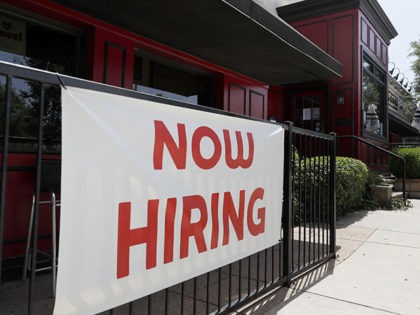
Those looking at the Job Openings and Labor Turnover Survey (JOLT) and seeing it as a roadmap to a July rate cut have taken a wrong turn.

The JOLTS report casts further doubt on the need for a rate cut from the Federal Reserve in the months ahead.

Job openings, hires, and quits all indicate a strong labor market, putting the case for interest rate cuts into doubt.

The red-hot labor market that warmed the economy in recent months, showed signs of cooling in November, with employers looking to fill fewer positions, fewer workers quitting, and the number of hires falling. The number of vacant jobs fell to

Could the long-awaited softening of the labor market finally be arriving?

The labor market refuses to cooperate with the “soft landing” scenario for the economy.

Job openings in the U.S. fell by much more than expected in July, suggesting that the extremely tight labor market may be loosening a bit. The Labor Department’s Job Openings and Labor Turnover Survey, known as JOLTS, showed Tuesday that

Not much to comfort the Fed in the latest JOLTS report.

Employers are still looking for nearly ten million workers.

The labor market is putting the Federal Reserve to the test.

The labor market is still refusing to cooperate with the narrative that the economy is softening.

So much for the idea that the labor market was softening enough for the Fed to hold off on rate hikes.

Job openings fell to 9.6 million in March, the Labor Department said Tuesday. That’s the lowest level of openings since April of 2021.

The number of job openings fell to 9.931 million as of the last day of February.

Job openings fell, reversing the rise seen in September.
A big and unexpected reversal for the Federal Reserve in a closely watched measure of the labor market. The job vacancy ratio is back up to 1.9.

Yesterday we explained that good news is bad news. Financial markets on Tuesday confirmed the corollary: bad news is good news.

Jerome Powell’s dream of taming inflation by bringing down job vacancies has turned into a nightmare of an overheating labor market.

Retail and construction openings crashed in June as the Fed raised interest rates at the fastest pace in decades.

While other parts of the economy seem to be teetering on the brink of recession, the labor market remains strong.

There are 1.7 jobs for every unemployed worker in America.
People are leaving their jobs in record numbers.
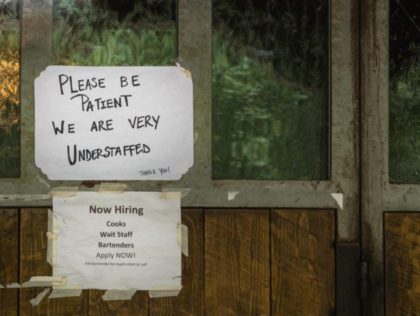
According to the report, 4.4 million Americans — three percent — chose to voluntarily leave their place of employment.

U.S. employers posted a record number of available jobs in June, data from the U.S. Bureau of Labor Statistics showed Monday. There were 10.1 million job openings on the last business day of June, according to the BLS. As well,

Job openings are up and actual hires are down, highlighting ongoing distortions in the Biden economy.