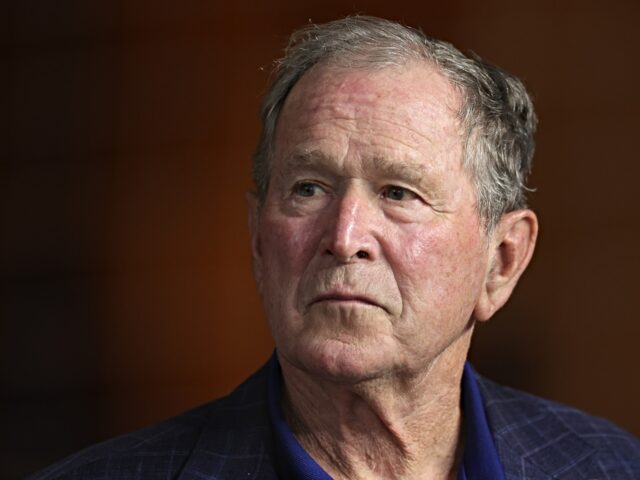
Following the fatal shooting of one National Guard member and the injury of another in Washington, DC, the George W. Bush Institute is urging against broadly targeting Afghan immigration applicants in response to the actions of a single individual.
Rahmanullah Lakanwal, a 29-year-old Afghan national who previously worked with a CIA-backed partner force in Kandahar and entered the U.S. in 2021 through the Biden administration’s Operation Allies Welcome, has been arraigned and is facing charges in the Thanksgiving-week ambush-style shooting that left 20-year-old Spc. Sarah Beckstrom dead and critically injured 24-year-old Staff Sgt. Andrew Wolfe.
Following the attack, U.S. immigration authorities announced an immediate and indefinite pause on immigration processing for Afghan nationals and launched a broad reexamination of immigration, asylum, and green card applications from 19 countries, including Afghanistan, Iran, Venezuela, Sudan, Haiti, Cuba, and Laos.
In response, the George W. Bush Institute posted on X: “The actions of a man charged with a heinous crime have derailed the lawful U.S. immigration applications of people from 18 countries so far, including Afghanistan. Afghans are facing uncertainty at home and in the U.S.
“Read why we can’t turn our back on Afghans and other immigrants due to one man’s crime: ”
The post linked to a full policy piece authored by Bush Institute directors Natalie Gonnella-Platts and Laura Collins. The article begins by condemning the D.C. shooting as “unconscionable,” calling it an act of terrorism, hate, and barbaric violence that “has no place in any civilized society.”
“Going back on our word to Afghans who helped us is contrary to our values as Americans,” the authors write. They assert that many of these individuals “risked their lives over the last two decades” working in partnership with U.S. forces and, despite undergoing years of vetting before arrival, are now facing disruptions due to the government’s response — including paused visa issuance, halted asylum decisions, and canceled naturalization ceremonies.
“Asylum seekers may continue to have court hearings, but they won’t receive a determination on their cases,” the authors explain. They urge elected leaders to investigate “what, if anything, could have been done to prevent this tragedy” rather than targeting all Afghans. “The suspect will be held accountable for his crimes,” they write, “but this man is responsible for his actions, not all foreign-born people.” They add: “The innocent shouldn’t bear the burden of someone else’s crimes.”
The article paints a grim picture of life under Taliban rule, portraying Afghans as having seen their “daughters, sisters, mothers, and nieces erased from every facet of public life” and suffering “unimaginable” deprivation due to tyranny and corruption.
The authors contend many of the displaced “have been forced to flee their homeland, many now for a second time,” and continue to resist extremism even from abroad. Despite refugee status, they claim these individuals are “leading the way in seeking justice,” preserving cultural identity, and resisting Taliban indoctrination.
The Bush Institute frames support for Afghans as consistent with American tradition, stating that “one of America’s unique strengths is how often in our history we have been a refuge for the poor and oppressed.” While the authors acknowledge that immigration policy has “long warranted improvement,” they emphasize that “reexamining our vetting procedures” should not result in blanket punishment. Lawful applicants, they conclude, “should have the opportunity to live their lives in peace.”
Deputy Chief of Staff for Policy and Homeland Security Advisor for President Trump Stephen Miller took aim at the Bush Institute on X, writing: “As Americans get ready to celebrate Christmas, the George W. Bush Presidential Center is very earnestly posting about the urgent need for unfettered migration from the most dangerous nations on planet earth, while effectively conceding some of these migrants will try to kill us.”
Miller has previously said that immigration policy cannot be evaluated solely on an individual, case-by-case basis. “You are not just importing individuals. You are importing societies,” he wrote shortly after the National Guard shooting. “No magic transformation occurs when failed states cross borders.” Miller described this view as central to what he called “the great lie of mass migration,” warning that migrants and their descendants can, at scale, “recreate the conditions, and terrors, of their broken homelands.”
COMMENTS
Please let us know if you're having issues with commenting.