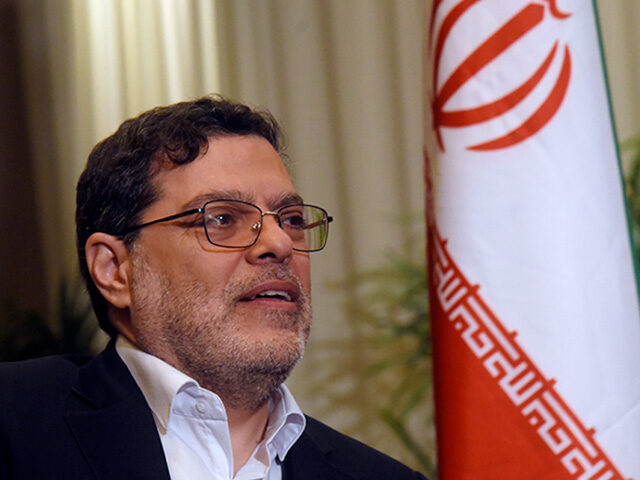

- Iranian analyst Mohammad Marandi claims Ukraine conducted Thursday’s deadly drone strike on a Kuwaiti air defense station as a false-flag operation.
- The attack killed two Italian Rheinmetall technicians and wounded a Kuwaiti army captain and a Pakistani national.
- Kuwaiti and Italian officials said the attack was conducted with Iranian drones and there is no evidence that any other party was involved.
- Iran has attacked Kuwait with hundreds of drones and missiles since March.
University of Tehran professor Mohammad Marandi, a former adviser to Ukraine’s nuclear negotiations team, on Thursday floated a conspiracy theory that the suspected Iranian drone attack on a Kuwaiti military installation that killed two Italian nationals could have been a “false flag” operation carried out by Ukraine.
“A lot of people in Iran believe that the attack on Kuwait was a false-flag operation, likely carried out by the Ukrainian regime, as its operatives are now present throughout the region, including in northern Iraq and Syria. Ukraine is seeking to demonstrate its capabilities to Trump,” Marandi wrote in a post on social media platform X.
Such a scheme would have been easy for the Ukrainians to pull off, the conspiracy theory posits, since Iran has been attacking every single country in the region with drones and missiles for months, including Kuwait. However, there is no evidence anyone but Iran was involved in Thursday afternoon’s drone strike on the air defense station in Kuwait. The attack killed two Italian technicians employed by the Rheinmetall Italia electronics firm who were performing routine maintenance on the station’s systems. A Kuwaiti army captain and a Pakistani national who was present at the base were also injured.
Italian media named the slain victims as Antonio Saccoccio, 65, and Emanuele Lo Russo, 36, and said they were working on radar detection antennae for the Skyguard air defense system at the base. Kuwaiti defense officials said they were killed by shrapnel from a drone intercepted at close range.
Rhinemetall is a German arms manufacturer with a branch in Italy. The Skyguard stationary air defense system is one of its premier products, incorporating guns and missile launchers linked to an advanced fire control unit.
Kuwaiti and Italian officials said the attack was perpetrated with Iranian drones. The Iranian embassy in Rome “categorically rejected” the allegation and proposed a “false flag” conspiracy theory similar to the one advanced by Marandi, although they were not as quick to finger Ukraine as the culprit.
“The incident is suspicious and looks like a precooked recipe for war,” declared Iranian Foreign Minister Abbas Araghchi, without explaining why Iran’s dozens of previous confirmed drone and missile attacks on Kuwait and other Middle Eastern nations were not ingredients in a recipe for war.
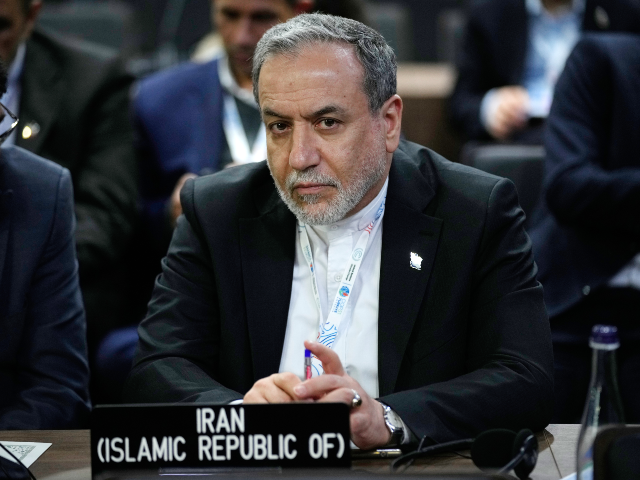
Seyyed Abbas Araghchi, the Minister of Foreign Affairs of Iran, attends a plenary session at the COP31 U.N. Climate Summit, Wednesday, November 11, 2026, in Antalya, Turkey. (AP Photo/Khalil Hamra)
Kuwait’s Foreign Ministry summoned Iranian Ambassador Mohammad Tutunji on Friday to lodge a formal protest against the attack, which he described as a “sinful” violation of its sovereignty and security, and a “grave violation of the principles of international law.”
Other regional governments condemned the attack, including Saudi Arabia, Qatar, and the United Arab Emirates (UAE). European Commission President Ursula von der Leyen said the world must “step up pressure on Iran to put an end to these unacceptable attacks against its neighbors.”
Al Jazeera News noted that while Iran usually admits to its flagrant terrorist attacks on neighboring countries – while insisting that it has not truly violated their sovereignty because its drones and missiles targeted bases linked to U.S. operations – it has floated a “false flag” conspiracy theory about one previous attack that also killed a foreign national, an Indian worker at a Kuwaiti desalination plant that was struck in March.
Kuwait University political science professor Abdullah al-Shayji pointed out that Iran has launched a total of 925 missiles and drones at Kuwait since March, so its denial “doesn’t fool anyone.” Al-Shayji suggested Iran had second thoughts about its latest terrorist attack on Kuwait because Italians were killed and a Pakistani was wounded. Also, the air defense base hit by the attack was not linked to U.S. forces.
“This one hit a Kuwaiti site and killed European civilians, which risks turning Europe and the Gulf hosts against it,” he said.
“The justification Iran has always used, ‘we don’t target countries, we target US military bases’, no longer exists,” he added.

Kuwait’s Crown Prince Sheikh Sabah Al-Khaled Al-Sabah arrives ahead of the the 81st session of the United Nations General Assembly at United Nations headquarters, Tuesday, September 22, 2026. (AP Photo/Stefan Jeremiah)
Relations between Iran and Ukraine turned sour after Iran’s thuggish military shot down a Ukrainian passenger aircraft in January 2020, killing 176 passengers. The incident occurred while Iran was pelting Iraq with ballistic missiles to get revenge for the U.S. elimination of terrorist mastermind Qassem Soleimani. Iran made a risible effort to claim that heinous crime was also a “false flag” attack conducted by American operatives.
Ukraine has been angry with Iran for supplying drones to the Russian invasion force. In July 2026, Ukraine attacked an Iranian cargo ship in the Caspian Sea that was allegedly carrying Iranian munitions to Russia. The Ukrainians said the ship was a legitimate military target because Iran was directly aiding the Russian war effort.
In June 2026, Kuwait ratified a defense agreement with Ukraine that could pave the way for Kuwait to obtain Ukraine’s drone defense technology and expertise. The skills Ukraine developed on the battlefield against Russia are much in demand among the Sunni Arab countries that have been attacked by Iran over the past nine months, which is just about all of them.
Russia purchased a large number of Iran’s cheap Shahed kamikaze drones, and began producing its own domestic variants, and Ukrainian defense forces have become very adept at shooting them down. To this day, Ukrainian soldiers and officials, including President Volodymyr Zelensky, routinely refer to all Russian drones as “Shaheds.”
Zelensky claimed in April that Ukrainian “experts in interceptor drones and experts in electronic warfare” have destroyed “Iranian Shaheds” in “several” countries, although he did not name Kuwait specifically.
To date there have been no confirmed sales of Ukrainian anti-drone systems to Kuwait, but Ukrainian advisers have been sent to several countries in the Middle East, which is why Marandi claimed there are “Ukrainian operatives throughout the region.”
COMMENTS
Please let us know if you're having issues with commenting.