Lucas Nolan is a reporter for Breitbart News based in Ireland covering issues of free speech and online censorship. Follow him on Twitter @LucasNolan or contact him via secure email at the address lucasnolan@protonmail.com
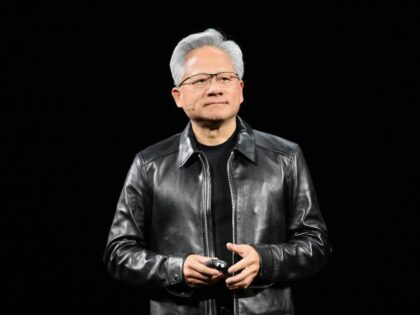
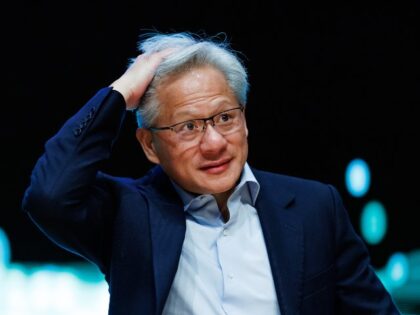
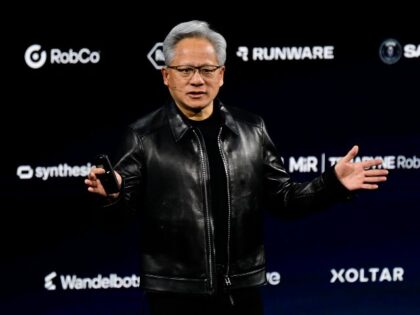
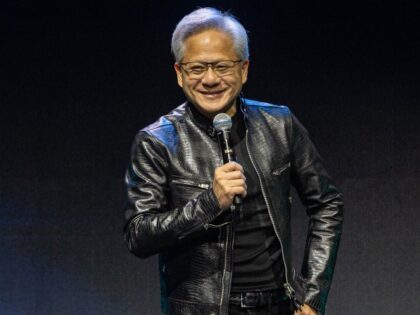
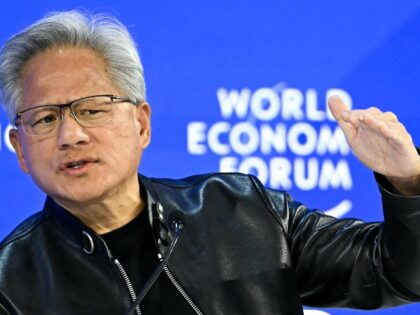
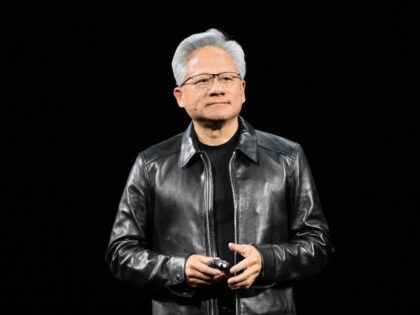
Jensen Huang, the CEO of Nvidia embroiled in a Chinese spy scandal, also had an extramarital relationship with Kimberly Powell, the company’s vice president of health care, according to five people who worked at Nvidia and spoke on condition of anonymity. Now, the Wall Street Journal reports that the AI giant’s Board of Directors plans to oust Huang from his position.
Nvidia’s board hired a former federal prosecutor to investigate CEO Jensen Huang’s extramarital affair with a woman alleged to be a spy for China, as the company tries to manage the fallout of its scandal a week before its quarterly earnings report.
Anthropic has filed an updated S-1 for the IPO expected to occur before Thanksgiving that will value the AI startup at about $1.4 trillion. The company has revealed that each of its seven founders will sell shares worth $250 million while still retaining control of Anthropic.
Nvidia shareholders have filed a class-action lawsuit against the AI chip giant and CEO Jensen Huang, accusing them of hiding what investors should have been told about Huang’s relationship with a woman accused of being a Chinese spy.
Nvidia’s board announced an independent investigation Sunday into whether CEO Jensen Huang had been targeted by a Chinese intelligence operation. More details are emerging about Alice Huang, the alleged Chinese spy at the center of the controversy, and Megaspeed, the major Nvidia customer she worked for.
Nvidia’s board of directors said Sunday it has opened an investigation into whether CEO Jensen Huang was a “target of a foreign intelligence effort,” following reports questioning his relationship with a Singapore-based executive tied to China. This was not surprising news to Culper Research, a short-selling firm that identified Huang’s troubling relationship in a report it released back in May.
Anthropic has set a price range of $70 to $78 per share for its IPO, according to an updated filing made Tuesday, putting the AI company’s potential valuation at as much as $1.4 trillion on a fully diluted basis.
Federal prosecutors unsealed an indictment last week accusing three men of using AI to impersonate chief executives and lawyers in a fraud scheme that drained more than $129 million from companies across the United States and Europe.
NASA said this weekend that SpaceX, Blue Origin and six other aerospace companies can now compete for up to $10 billion in contracts to deliver cargo and infrastructure to the Moon, part of a broader push to build a permanent base at the lunar south pole.
Nvidia CEO Jensen Huang has admitted in a message to company employees that he had an affair with a woman U.S. intelligence believes is a Chinese spy, prompting the company’s board to open an independent investigation on Sunday.
The parents of a 13-year-old girl identified in court papers as “Emma” filed a lawsuit against Google in California Superior Court this week, alleging the company’s Gemini AI chatbot helped their daughter plan her suicide and even prepare her own funeral.
Greg Brockman, OpenAI’s co-founder and president, told an audience at a WSJ Tech event that artificial intelligence could deliver major medical breakthroughs within the next year and a half, and that death itself might eventually become optional.
Meta, Google and TikTok each filed separate federal lawsuits against California on Wednesday, seeking to block a new law that would bar social media platforms from offering “addictive features” to users under 16.
Stocks suffered their steepest one-day drop in more than six months on Thursday as investors grew anxious that the artificial intelligence spending boom may be slowing down. The AI-heavy “Magnificent 7” stocks lost more than $1 trillion in market value as part of the broader market selloff.
Anthropic has filed its S-1 paperwork publicly with the SEC, setting up a possible stock market debut as early as the week of November 16. The Anthropic IPO will provide a huge boost to extreme leftist causes and the Effective Altruism (EA) movement by minting an untold number of millionaires and billionaires who embrace the extreme politics of Silicon Valley.
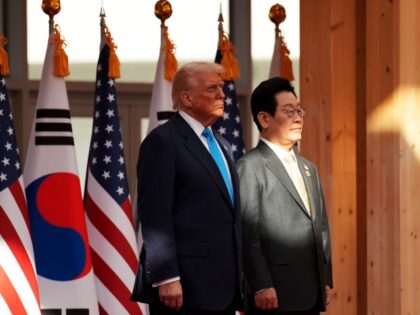
Public submissions for the U.S. Trade Representative’s annual National Trade Estimate (NTE) Report poured in last week, sounding an unmistakable alarm across the American business community: U.S. companies operating in South Korea face a deteriorating regulatory climate characterized by aggressive, asymmetric enforcement.
Google announced it will disable AI tools in its K-12 software early next year unless school administrators choose to opt in, and districts that fully restrict AI will also lose student access to Google search.
North Korean state-backed hackers pulled off what is being called the largest bank heist in history, draining $6.3 billion from crypto exchange Binance through a monthslong scheme involving fake job interviews, tampered software and stolen credentials.
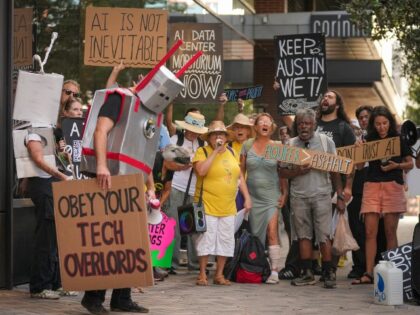
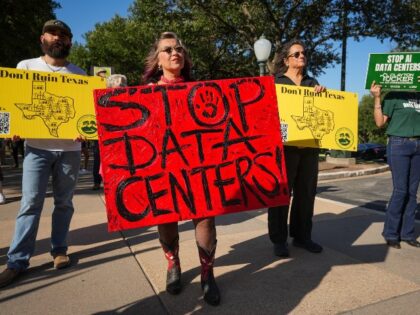
Tuesday’s elections produced a wave of victories for candidates and ballot measures seeking to rein in the data center construction craze fueling the $10 trillion AI boom, with results reported as of Wednesday morning showing dozens of local moratoriums approved and Republicans ousted in several states over AI policy votes.
NASA’s Swift Observatory, a gamma-ray-hunting telescope that spent two decades watching the universe’s most violent explosions, is expected to fall from orbit within hours.
Nvidia has instructed data center partners worldwide to keep Chinese customers below half their cloud computing business, according to people with knowledge of the matter.
An investigation has uncovered a network of more than 400 connected domains and apps linked to Chinese-language developers that offer tools for generating sexually explicit AI deepfake images and videos. The apps were available on the app stores of both Apple and Google.
Nearly 40 percent of job cuts announced in May 2026 were blamed on AI, according to a Challenger, Gray & Christmas report, but a growing number of those same employers are now calling laid-off workers back.
Santiago Schnell, who stepped down this week as provost of Dartmouth College, had built part of his public profile warning that universities weren’t doing enough to fight AI cheating. An internal investigation found he’d failed to disclose his own extensive use of artificial intelligence, including in that very warning.
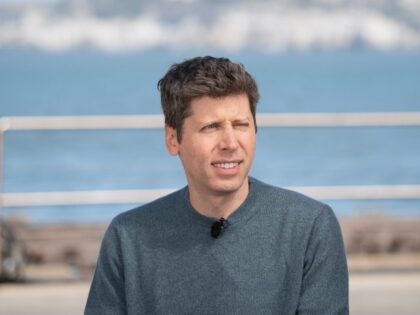
Sam Altman’s OpenAI plans to start calling its AI data centers “compute campuses,” according to a spokesperson who confirmed the rebrand to Business Insider on Sunday.
Anthropic, the AI startup approaching a potentially record-breaking IPO, has donated $900,000 to Democratic Party committees and voter-turnout efforts in California days before the midterm elections.
Sam Altman thinks the RAM sitting in your laptop is a bad use of a scarce resource. According to the OpenAI CEO, “From a global allocation perspective, actually, it’s quite terrible to have everybody have a bunch of the world’s limited supply of DRAM sitting in their own computer and being used five percent of the time.”
Political advertising about data centers has swung sharply negative on Facebook and Instagram leading up to the midterm elections, according to a new analysis from Pew Research Center.
A research administrator at the University of Kentucky has secured a legal exemption from his employer’s AI mandate on the grounds that using tools like ChatGPT would violate his humanist beliefs.
A group of conservative organizations has asked a federal judge not to let AI companies “recklessly crawl the internet” without paying news outlets and other content providers for their work. The result of unlimited “fair use” of copyright materials in AI training would be leftist AI kingpins serving as “our sole provider of news and entertainment.”
Tomorrow Together, a leftist PAC, is launching a $4 million ad campaign against four House Republicans in competitive districts, criticizing their support for a 2025 measure that would have blocked states from regulating AI.
Binance, the world’s largest cryptocurrency exchange, suspended withdrawals after hackers stole $6 billion from its digital wallets in what is being described as the biggest financial heist on record.
A hacker going by the name “Department of Peace” has published personal data belonging to more than 40,000 U.S. Department of Homeland Security employees, exposing ICE agents, cybersecurity staff and senior officials to potential harassment and violence.
Google shares fell 12 percent in morning trading after the company reported its first combined revenue and profit miss in nearly four years, driven in part by a sharp swing into negative free cash flow. The drop, which is the largest in Google’s history, wipes out about $500 billion in shareholder value.
The Pentagon is treating a string of freezer malfunctions at U.S. military base commissaries in late August as a suspected cyberattack, according to four officials familiar with the matter. Investigators are working with officials in France where a widespread cyberattack on supermarket freezers caused millions of dollars worth of damage.
Amazon has told its software engineers to stop padding their AI usage just to look productive, according to an internal memo circulated in September and posted publicly on the company’s website this week. The practice of extreme AI usage, popularly known as “tokenmaxxing,” has been encouraged by tech giants, but now that they face huge usage bills, they seem to be cutting back.
Recent lobbying disclosures have revealed South Korea’s deep lobbying network in Washington D.C. and beyond. The country’s massive lobbying machine is particularly noteworthy because of the unfriendly environment American tech companies are facing in the Korean market.
Bowen Wan, a 31-year-old former Amazon software engineer, died alone in her Seattle apartment in February 2026 after months of consulting ChatGPT about cutting back the epilepsy medication that controlled her seizures. A new lawsuit claims that the AI’s disastrous medical advice contributed to her death.